
Hair Extensions in Houston Humidity: What Actually Holds Up (Tape-In vs. Hand-Tied vs. Clip-In)
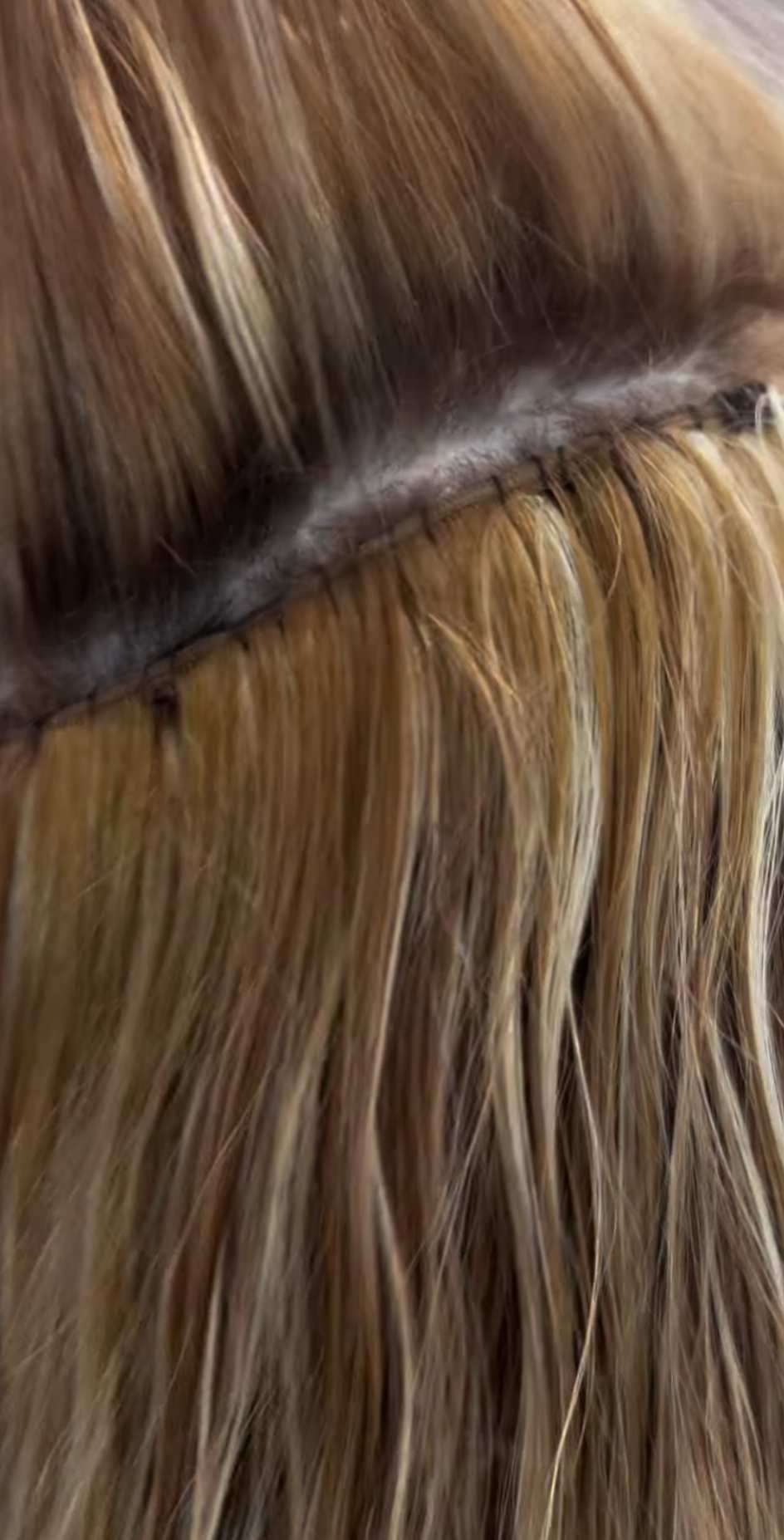
Hand-tied wefts: the no-adhesive method that survives Houston summers.
If you've lived through even one Houston August, you already know the drill. You do your hair, you walk from your front door to your car — maybe forty feet — and by the time you're buckled in, your blowout has ideas of its own.
Now add extensions to that equation.
We get this question at the salon constantly: "Will extensions even survive Houston?" The short answer is yes. The longer, more honest answer is that some methods handle our climate a lot better than others, and the difference usually comes down to three things — the bond, the weight, and how much maintenance you're realistically willing to do when it's 95 degrees with 80% humidity.
Let's break down the three most popular methods and how each one actually performs here, not in some dry-climate Instagram tutorial filmed in Arizona.
First, why humidity is such a big deal for extensions
Humidity doesn't just make hair frizzy. Hair is hygroscopic — it absorbs moisture from the air, swells, and changes shape. That's why your natural texture "reverts" the second you step outside. Houston sits on the Gulf, and our average relative humidity hovers around 75% for most of the year (you can see the depressing data for yourself on the National Weather Service's Houston climate page).
For extensions, that means three specific problems:
- Adhesives and bonds are under stress. Moisture, sweat, and oil are the natural enemies of anything glued or taped to your head.
- Swelling hair means more tangling. Where your natural hair meets the weft is a tangle hotspot, and humidity makes it worse.
- You wash more often. Sweaty scalps need more frequent washing, and every wash is wear and tear on the attachment point.
Keep those three things in mind, because they explain almost everything below.
Tape-Ins: great hair, high-maintenance relationship
Tape-in extensions are thin wefts attached with medical-grade adhesive strips that sandwich small sections of your natural hair. They're fast to install, they lie flat, and they're one of the most affordable semi-permanent options.
How they do in Houston: honestly, it's a mixed bag. The adhesive is the weak link. Sweat, sebum, and heavy conditioners can all break down the tape over time, and in our climate you're producing more of all three. Clients who work out daily, spend weekends on the water, or just run warm tend to see tape-ins start slipping earlier here than they would somewhere drier.
That doesn't make them a bad choice — it makes them a choice with rules. If you go tape-in in Houston, you'll want to:
- Keep oils and heavy masks strictly mid-length to ends, never near the tape
- Dry your roots completely after washing (damp tape is loose tape)
- Come in for move-ups on schedule, usually every 6–8 weeks, and don't push it
Best for: someone with finer hair who wants a flat, undetectable install and doesn't mind babying the roots a little.
Hand-Tied Wefts: the Houston workhorse
Hand-tied (and machine-weft "beaded row") extensions are sewn onto a small track of beads anchored to your natural hair. No glue, no tape, no heat — just a physical attachment.
And that's exactly why they tend to win in this climate. There's no adhesive for the humidity to break down. Sweat all you want; the beads don't care. You can wash more frequently, work out, and survive a July wedding on somebody's backyard patio without your extensions plotting an exit.
The trade-offs are real, though. Hand-tied wefts cost more up front, they require a stylist who's genuinely trained in the method (placement and tension matter enormously for the health of your natural hair), and you'll still need maintenance appointments every 6–9 weeks as your hair grows and the rows move down.
One Houston-specific tip: because humidity makes everything swell and tangle, brushing matters more here. A gentle brush at the row line, morning and night, keeps the wefts from matting — thirty seconds that saves you an hour later.
Best for: anyone wearing extensions full-time in Houston, active lifestyles, and people who've had tape-ins slip on them before.
Clip-Ins: the smart part-timer
Clip-ins get dismissed as the "beginner" option, but in a climate like ours they deserve more respect. You wear them when you want them, and — this is the key part — they're not on your head during the sweaty parts of your day. They never go through your workout, your commute, or your August. That means the hair itself lasts years with basic care.
The catch: they're not a lifestyle, they're an accessory. Wearing clip-ins daily can stress your natural hair at the clip sites, and nobody wants to sleep in them (please don't sleep in them). Quality also varies wildly, so it's worth having a stylist color-match and trim them into your cut rather than guessing from a website swatch.
Best for: occasional volume — date nights, events, bridal and special-occasion styling — or anyone who wants to test-drive the extension life before committing.
The honest comparison
| Tape-In | Hand-Tied | Clip-In | |
|---|---|---|---|
| Humidity resistance | Moderate — adhesive is vulnerable | High — no glue to fail | High — you control exposure |
| Maintenance visits | Every 6–8 weeks | Every 6–9 weeks | None (occasional refresh) |
| Daily upkeep | Careful root care | Brushing at the rows | Minimal |
| Best Houston fit | Fine hair, disciplined routine | Full-time wear, active life | Events and part-time volume |
Whichever you choose, the aftercare is non-negotiable here
Houston humidity punishes dry, thirsty extension hair — remember, extensions don't get your scalp's natural oils, so they're already prone to dryness, and frizz is dryness meeting moisture in the air. A sulfate-free routine and a genuinely good leave-in make the difference between extensions that blend and extensions that announce themselves. We're partial to Kérastase for a reason — their masks and leave-ins are some of the few that keep weft hair soft without loading it with silicones that build up in humidity.
Heat-style with intention, too: a smoothing pass with a lower-temp iron plus a humidity-resistant finishing spray will outlast a scorching blowout every time.
So… what actually holds up?
If we had to rank purely on humidity survival: hand-tied first, clip-ins second (on a technicality), tape-ins third — with the giant asterisk that the right method is the one that fits your hair density, your budget, and how you actually live. A tape-in client with a great routine will always have better hair than a hand-tied client who never brushes her rows.
That's why we start every extension journey with a consultation, not a sales pitch. Come sit down with one of our artists, let us look at your hair in person, and we'll tell you straight what will hold up for you — not just what holds up on average. Not sure who to see? Our stylist-matching quiz pairs you with the right person on the team.
Ready when you are: book an appointment at our Woodland Heights studio, or browse the rest of our services first. Your hair can absolutely win against Houston humidity — it just needs the right game plan.
More hair talk on the Studio A blog.
Posted on 07/10/2026 at 03:11 PM


