
Brazilian Blowout vs. Keratin Treatment: What Actually Works on Houston Hair
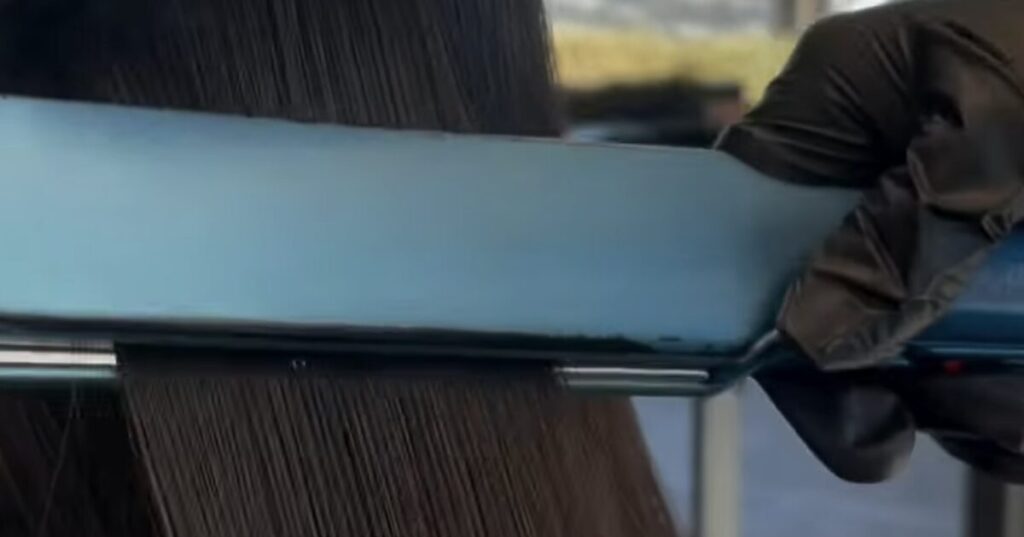
The smoothing calls start in September. Every year, without fail. By then Houston summer has had four months to work on people’s hair, the blow-dry lasts about eleven minutes before it swells, and the question comes in some version of this: is a Brazilian blowout Houston salons offer the same thing as a keratin treatment? No. They get used interchangeably in conversation, and they behave differently on the head, on the calendar, and on color-treated hair. Here’s the version we give clients in the chair. What a Brazilian blowout Houston stylists perform does to the hair Brazilian Blowout is a brand, not a category. The system applies a liquid amino acid solution to damp hair, which then gets blown dry and flat-ironed in small sections at high heat. The heat isn’t a finishing step. It’s what drives the chemistry. As the iron passes through, the solution forms crosslinks with the hair’s own protein and leaves a smoothing layer bonded around each strand. What it doesn’t do is permanently break disulfide bonds. That’s a relaxer, and it’s a different service with different consequences. A Brazilian blowout works largely on the cuticle and the hydrogen bonds, so curl comes back looser and softer rather than disappearing. Wave stays wave. It just stops swelling the second you walk outside. What a keratin treatment does differently A keratin treatment uses hydrolyzed keratin plus an acid carrier, sealed in with the same flat-iron heat. The protein deposits deeper into a porous cuticle and fills gaps, which is why keratin does more actual straightening than a Brazilian blowout does. On coarse or very curly hair, a keratin treatment can drop the curl pattern noticeably. On fine hair it can drop it too much and leave the hair flat. That deeper deposit is also why keratin asks more of you afterward. If you want the room-by-room walkthrough, we covered it in what to expect during a keratin treatment appointment. How long each one lasts, and how each grows out A Brazilian blowout runs about ten to twelve weeks. A keratin treatment runs three to five months, sometimes longer on hair that isn’t washed daily. The grow-out matters more than the number. Brazilian blowout fades from the ends inward and gets progressively less effective without leaving a visible ledge at the root. Keratin holds harder and longer, so on tightly curled hair you can see where the treated section starts, especially around month four. It softens rather than snapping like a relaxer line, but it’s visible. If you have a wedding, a move, or a stretch where you can’t get back in the chair, that difference is worth thinking about. Aftercare, where the two services separate most A Brazilian blowout can be washed the same day. You leave, you shower that night, nothing collapses. A keratin treatment needs a wait, generally 24 to 72 hours depending on the formula. During that window: no ponytail, no clips, no tucking behind the ears, no headbands. A crease set in during that window can stay set. Both need sulfate-free shampoo, and this isn’t a product upsell. Sulfates strip the deposited protein and the crosslinks along with the oil. Sodium chloride does the same thing, so read the back of the bottle, not the front. Houston water is the other half of aftercare that nobody warns people about. Mineral buildup shortens the life of a smoothing treatment the same way it dulls color, which we broke down in what Houston hard water does to hair color. A shower filter buys you weeks. Color-treated and bleached hair Order of operations: color first, smoothing second, in that sequence. A Brazilian blowout can typically follow a color service the same day. Keratin is more particular, and it can shift tone slightly, usually lifting about half a level and softening fashion tones and vivids faster than you’d like. Bleached hair is its own conversation. Highly lifted hair is porous and structurally compromised, and the flat-iron pass on a smoothing service runs hot. Sometimes we lower the iron temperature. Sometimes we push the smoothing out and do a bond-repair series first. That call happens at the consultation, not at the shampoo bowl, and it’s part of how we approach every chemical service. Which is better, a Brazilian blowout or keratin? Neither is better in the abstract. They solve slightly different problems. Choose a Brazilian blowout if you want to keep your curl or wave and just want it to behave, if you can’t take a wash-free 72 hours, if your hair is fine and you don’t want it flattened, or if you color often and want the shorter interval between services. Choose keratin if your hair is coarse, dense, or tightly curled, if you want real straightening and a shorter blow-dry, or if you’d rather come in three times a year than five. If your main complaint is frizz in August rather than curl, we went deeper on that in our keratin treatment guide for Houston humidity and frizz. Is a smoothing treatment actually good for your hair? Straight answer: it’s neutral to mildly beneficial for the strand and worth asking questions about for your lungs. Structurally, a sealed cuticle means less mechanical damage, because you’re not fighting your hair with a brush and 400-degree iron every morning. That’s a real benefit and it compounds over months. The caveat is the chemistry. Many smoothing formulas release formaldehyde when heated, including some labeled formaldehyde-free, and the FDA has documented this directly. Ask what product is being used, ask what’s in it, and look at whether the salon is actually ventilated. Any stylist who gets defensive about that question is the wrong stylist. When neither treatment is the right call Skip both if your hair is currently breaking, if you’ve bleached within the last few weeks and haven’t rebuilt, if you have an inflamed or compromised scalp, or if you’re pregnant or nursing and haven’t cleared it with your doctor. Also skip if what you actually want is poker-straight hair on a tight curl pattern. Neither service will get you there, and chasing it with repeat applications is how people end up with damage. Booking a Brazilian blowout Houston appointment We consult before we commit to either service, in Woodland Heights, with your actual hair in front of us.
Why Houston’s Hard Water Is Ruining Your Hair Color
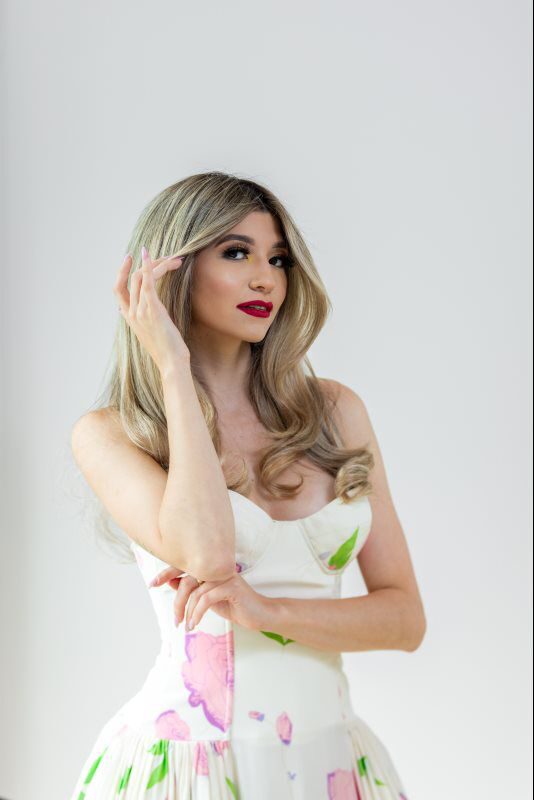
You walked out of the salon with the exact blonde you asked for. Three weeks later it reads brassy, feels rough near the roots, and won’t hold shine no matter which mask you buy. Before you blame your colorist, check your shower. Houston hard water is the most common reason color fades early in this city, and almost nobody warns you about it. Per Houston Public Works’ annual water quality report, average total hardness across the city runs around 137 mg/L, roughly 8 grains per gallon. That sits squarely in the hard range. Drive out toward Katy or Cypress and the numbers climb higher still. What “hard” actually does to color Hard water carries dissolved calcium and magnesium picked up from the limestone under our feet. Trace iron and copper come along too, especially through the older plumbing you’ll find across Woodland Heights, the Heights, and Montrose. Every shower leaves a microscopic mineral film on the hair shaft. One wash, nothing. Sixty washes, and you’ve built a layer that behaves like a screen sitting over your color. Here’s how that shows up: Everything goes dull. Shine depends on a smooth cuticle bouncing light back. Mineral deposits roughen that surface, so hair reads flat even when the color underneath is still perfectly good. Blondes pull orange. Iron and copper oxidize on the hair. On cool blondes and ash tones, that oxidation reads as brass or a faint rusty cast, and you’ll see it first around the hairline and through the ends. Brunettes go muddy. Rich chocolates start looking gray or dusty. The mineral layer flattens the reflect your colorist built into the formula. Toner disappears. Toner is the most fragile part of any color service. Buildup plus daily washing can strip it in two weeks instead of six. Conditioner stops working. Product sits on top of the film instead of penetrating, so the expensive mask you bought does even less than the drugstore one did. There’s a longer-term problem too. Show up to your next appointment carrying months of mineral load and color doesn’t take evenly. Your colorist is working through a barrier. This is one of the quiet reasons a formula that looked beautiful in January can go patchy by June, and a common thread in the cases that end up needing color correction. How to tell it’s your water That last one is the giveaway. If your fixtures are showing buildup, your hair is too. What actually fixes it Put a filter on your showerhead. Highest return of anything on this list, and the step most people skip. Thirty to sixty dollars, five minutes to install, cartridge swap every few months. It won’t strip hardness completely, but it pulls enough chlorine, iron, and copper that tone holds noticeably longer. Most clients see the difference within three or four washes. Use a chelating shampoo sparingly. Chelating shampoos bind minerals and lift them out, which is different from clarifying shampoos that mostly chase product buildup. Once or twice a month covers it. Weekly use will fade your color faster than the water was. Ask for a mineral removal treatment before your color. We do this in-house when the hair calls for it. Clearing the mineral layer first means the formula lands on clean hair and the result holds. If you’ve lived in Houston for years and never had one, bring it up at your next appointment. Rinse cooler, wash less. Hot water lifts the cuticle and invites more mineral in. Every wash you skip is a wash’s worth of buildup avoided. Two or three times a week is the sweet spot for color-treated hair. Skip the vinegar rinse. You’ll see it recommended everywhere. It does lift some mineral. It also pulls tone. Not a trade worth making on fresh color. The Houston stack Hard water alone is rough. Add our humidity, the summer sun, and chlorine from half the pools in the neighborhood, and color-treated hair is getting hit from three directions at once. It’s the same reason extensions need a specific maintenance routine here that they wouldn’t need in a drier climate. None of that means you can’t wear an icy blonde in this city. It means maintenance has to be part of the plan from day one, which is exactly what we map out during a consultation with one of our Houston colorist. Bring it in If your color keeps going brassy no matter what you buy off the shelf, stop swapping shampoos and let us look at the hair. Half the time the answer is a mineral removal treatment and a gloss, not a full redo. Book an appointment and we’ll figure out what your water is doing before it costs you another color service.
Hair Extensions in Houston Humidity: What Actually Holds Up
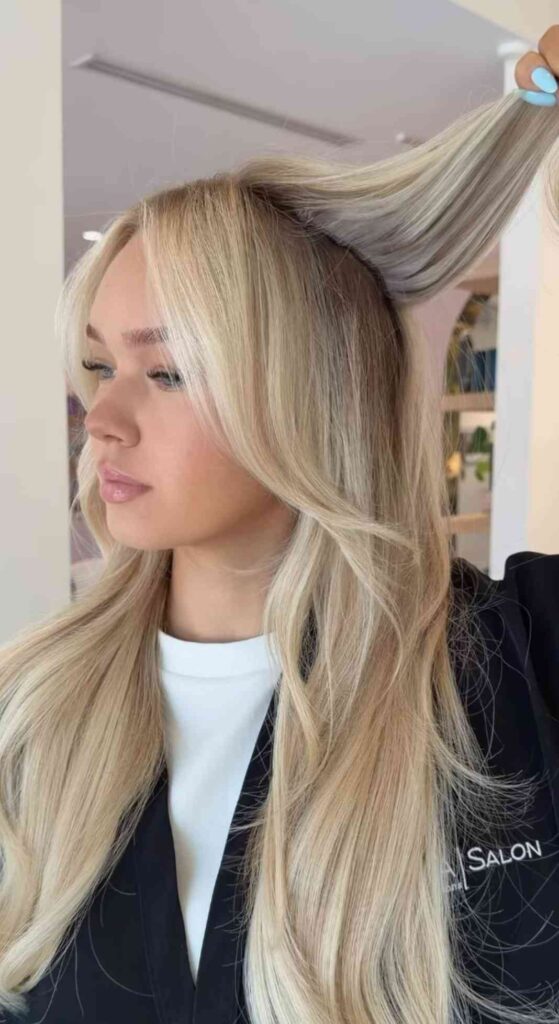
Most people asking about hair extensions in Houston have already had one bad experience. A client comes in with extensions installed somewhere else, and by week three the top layer looks smooth while the extension hair has puffed into something completely different. Or the wefts have slid an inch down and there’s a matted knot at the nape she can’t brush out. That’s usually not a client problem. Houston sits on the Gulf Coast, and from May through September the air holds moisture the way a wet towel does, which changes how extension hair behaves, how well the attachment points hold, and how often you realistically need to come back in. If you’re weighing hair extensions in Houston, the method matters less than most people assume, though it does matter, and a few options genuinely hold up better here than others. Here’s what we tell clients before they book. Why Humidity Is the Whole Problem Hair swells when it absorbs moisture. Your natural hair does it and so does the extension hair, but they don’t always do it at the same rate, and that’s where the trouble starts. Extension hair has been processed. Stripped, colored, and usually silicone-coated so it feels glassy in the package. That coating wears off after a handful of washes, and once it’s gone the cuticle underneath reacts to humidity on its own terms. Lower grades of hair react fast. That’s the mismatch you see around month two, where your hair looks fine and the extension hair looks frizzy and dull no matter how much oil you put on it. The second issue is weight. Damp hair is heavier hair, so attachment points that felt comfortable in an air-conditioned salon are carrying more load by the time you’ve walked to your car in August. Add sweat at the scalp, product buildup, and the mineral content in Houston’s water, and the bond area takes a lot more stress here than it would in a dry climate. How Each Method Handles Gulf Coast Air There’s no single winner. There’s a right answer for your hair, your budget, and how much salon time you’re willing to commit to. Tape-ins are the most popular option here, and for good reason. They’re flat, fast to install, and reusable. The tradeoff is that adhesive and heat aren’t friends, so sweat, oil, and steamy days all soften the bond. Clients who work out hard or spend their weekends outside tend to see slippage before the standard six to eight weeks are up. Tape-ins suit fine to medium hair well as long as you’re realistic about the move-up schedule, and they’re a poor fit for anyone washing every other day with an oily scalp. Hand-tied wefts get sewn onto a beaded track instead of glued, so there’s no adhesive to break down at all. That makes them one of the more humidity-stable choices we install, and the weft lies flat and moves the way most clients want it to. The catch is density. A hand-tied weft needs enough hair to hide the track and support the weight, and fine hair around the temples and hairline often can’t carry it. That’s a consultation question rather than a website question. [If your hair is on the finer side, our stylists will usually walk through options in person before recommending anything.] Beaded Wefts, Keratin Bonds, and Clip-Ins The remaining three options each solve a different problem, and none of them is a default. Machine-sewn and beaded wefts run thicker at the seam than hand-tied, but they’re stronger and often the better call for clients who want real volume. Same advantage in humidity, since there’s no glue involved, and the same requirement that you have hair that can carry it. Keratin bonds give you the most movement and the most flexible placement, which is genuinely useful for filling in around a face-framing layer. They also soften with heat, so blow-drying directly on the bond and long stretches of outdoor heat will both shorten their life. Bonds take the longest to install and the longest to remove. Clip-ins aren’t a long-term answer, but they’re the smartest option for a wedding weekend, a photo shoot, or a client who isn’t ready to commit to anything. Nothing sits on your scalp between wears, which means nothing pulls. What Actually Goes Wrong Here A few failure patterns show up over and over with hair extensions in Houston, and we see all of them at our Heights salon. Matting at the nape is the most common. The back of your neck stays damp longer than anywhere else on your head, so if you’re sleeping on wet hair or tying it up before it’s fully dry, that’s where the tangling starts. Texture drift is next. The extension hair loses its coating and begins frizzing on a different schedule than your own hair. Better-quality hair delays that, though nothing prevents it entirely. Slippage usually traces back to oil, or to conditioner applied too close to the root, or occasionally to a bond that was set on hair that wasn’t quite dry. Mineral buildup is the one people miss. Houston water leaves deposits that dull extension hair faster than they dull your own, because extension hair isn’t getting any oil from your scalp to protect it. If your extensions look grey-toned or feel coated, look at your water before you blame the hair. Quality of Hair Beats Choice of Method You can install a mediocre bundle perfectly and it will still look rough in six weeks. Good hair installed with a solid method will get you eight to twelve months with proper move-ups. Ask what hair your stylist uses and where it comes from, and ask whether the cuticle is intact and aligned. Cuticle-aligned Remy hair costs more up front, and it’s the single biggest factor in whether your extensions survive an August in this city. [We use ___ for most of our installs, because ___.] Cheaper hair is cheaper for a reason that shows up around week
What to Ask Your Hairstylist Before Coloring Your Hair in Houston

BLOG What to Ask Your Hairstylist Before Coloring Your Hair in Houston Most color “fails” don’t happen because the formula was wrong, they happen because the plan was never fully agreed on. If you want a result you’ll still love in Houston humidity, the smartest move is walking into your consultation with the right questions and your full hair color history. At Studio A Salon in Houston, we often find that the biggest source of color disappointment isn’t the formula itself—it’s unclear expectations during the consultation. The most successful color appointments start with an honest discussion about hair history, maintenance goals, lifestyle, and what’s realistically achievable while protecting hair integrity. Why These Questions Matter Before You Color in Houston Inspiration photos can be misleading because they rarely show the starting color, the previous color work, or the multi-session plan behind the final look. Asking direct questions upfront creates realistic expectations and prevents the common “why doesn’t mine look like that?” moment. Surprise costs and time overruns usually come from unspoken steps like extra bowls of lightener, a second toner, or an added root smudge. When you clarify appointment length, number of visits, and maintenance cadence, you protect your schedule and your budget. Damage is typically the result of a mismatch between the goal and your hair’s condition. A good colorist will factor in hair integrity, texture, porosity, elasticity, and any breakage before choosing bleach, a gentler lightener, or a more conservative approach. Houston adds its own variables. Humidity, sun exposure, and frequent washing after workouts can shift tone, speed fading, and make brassiness show up faster than clients expect. Bring the Right Info to Your Consultation Your stylist can only formulate accurately if they know your full history. Be ready to share every detail of your hair color history, including box dye, salon color, bleach, toners, and any keratin or smoothing treatments. Bring 2 to 3 inspiration photos plus one “don’t want” photo. The “no” photo is often the fastest way to define boundaries around warmth, contrast, brightness, and placement. Start With a Consultation: Questions That Set the Plan Ask whether a dedicated consultation is included or booked separately before the service. For major changes or any color correction, a separate consult often leads to better planning and fewer surprises. Ask how your stylist evaluates hair integrity before choosing a formula. You want to hear specifics like checking elasticity when wet, porosity through mids and ends, and looking for breakage around the hairline and crown. Confirm whether a strand test or patch test is recommended for your situation. A strand test can prevent a predictable disaster with previous color, and a patch test matters if you’ve had scalp sensitivity or any past allergic reaction. Ask what “success” looks like for your goal. Have them describe tone, dimension, brightness, blend, and grow-out in plain language, not just “ashy” or “natural.” Ask to See Proof of Similar Work Request a portfolio with before and after photos on similar starting levels and textures. Someone who nails bright blondes on natural level 7 hair may not be the right match for a level 2 brunette with old box dye. Ask who will perform each step and who checks the final tone. It’s normal for an assistant to help, but you should know who is applying lightener, who is mixing the toner, and who signs off at the bowl. Shade and Technique: Make Sure the Color Fits You Ask which shades suit your skin tone and undertone, and why. A great colorist can explain the difference between warm tones, cool tones, and neutral options using your features, not a generic chart. Ask which technique matches your goal: balayage, highlights, lowlights, gloss, root shadow, or color melt. Technique determines not only the look, but also how obvious your regrowth will be at week 6, 10, or 14. Ask how the color will look in different lighting and how it will fade. Salon lighting is flattering, but you live in car mirrors, office fluorescents, and Houston sun. Ask if your natural base and texture will change the final result compared to the inspiration photo. A natural base with strong warmth underneath will reflect differently than a cooler base, even with the same toner. If you’re deciding between balayage and traditional foils, read our breakdown on choosing the right technique for dark hair in Houston: this comparison of hand-painted color vs. foiled dimension. Permanent vs. Demi-Permanent vs. Semi-Permanent Ask which type is best for gray coverage, shine, and fade pattern. Permanent hair color is often best for stronger gray coverage, while demi-permanent hair color can be ideal for blending, toning, and shine with a softer grow-out. Ask how each option impacts future lightening and correction. Semi-permanent hair color can be lower commitment, but it can still stain porous hair and complicate your next lightening session. Hair Health and Safety: What Your Hair Can Handle Ask what level of lift is realistic in one session given your current level and prior color. If you have previous color, especially dark dye, your stylist may need multiple sessions to lift without pushing your hair past its limit. Ask about bond builders and protective steps, and whether they’re included in price. A bond builder can reduce damage during lightening, but it’s not the same as a deep conditioning treatment, so ask what’s being used and why. Ask what could go wrong and what the backup plan is. A professional answer includes risks like brassiness, banding from old color lines, unexpected warmth from underlying pigment, and the possibility of stopping early to avoid breakage. Ask if scalp sensitivity, allergies, or shedding concerns change the approach. If you’ve ever reacted to dye, you want a plan that prioritizes safety, including a patch test and product selection. The American Academy of Dermatology also recommends discussing allergies, scalp sensitivity, and hair condition before any chemical service. Reviewing these hair coloring and perming safety tips can help you better understand the questions to ask before your appointment. We often
Keratin Treatment in Houston: Is It Worth It for Humidity and Frizz? (A Stylist’s Honest Guide)

BLOG Keratin Treatment in Houston: Is It Worth It for Humidity and Frizz? (A Stylist's Honest Guide) Before and after blonde transformation at Studio A Salon in Houston — from foil application to a seamless, glassy platinum finish, custom-toned to stay bright and smooth in Houston humidity. If you live in Houston, you already know the routine: you blow-dry your hair smooth at 7 a.m., and by the time you walk from your car to the office, the humidity has undone all of it. Houston is consistently ranked among the most humid major cities in America, and that moisture in the air is the single biggest reason your hair frizzes, puffs, and loses its shape within hours. A professional keratin smoothing treatment is the most effective way to keep hair smooth, shiny, and manageable in Houston’s climate. For most clients, results last 3 to 5 months, cut blow-dry time roughly in half, and dramatically reduce frizz — even in August. Here’s how it works, who it’s right for, and what to ask before you book at Studio A Salon. What Is a Keratin Treatment, Exactly? Keratin is the natural protein your hair is already made of. Heat, color services, hard water, and UV exposure gradually wear that protein layer down, leaving the cuticle (the outer layer of each strand) rough and raised. A raised cuticle is what grabs moisture out of humid air — and that’s frizz. A professional keratin smoothing treatment deposits a keratin-based formula onto the hair, then seals it into the cuticle with heat from a flat iron. The result is a smoother, more sealed strand that: Resists humidity instead of absorbing it Reflects more light, so hair looks shinier Dries faster and styles in a fraction of the time Feels softer and detangles more easily Importantly, a keratin treatment is not a chemical relaxer. It doesn’t permanently break the bonds in your hair. If you have waves or curls, you can choose a level of smoothing that simply removes frizz while keeping your natural texture — or go sleeker for a straighter finish. It gradually washes out over several months, so there’s no harsh grow-out line. Why Keratin Treatments Make So Much Sense in Houston Specifically Two local factors work against your hair here, and we’ve written about both on this blog: 1. Humidity. Houston’s air holds enormous amounts of moisture for most of the year. Porous, damaged, or color-treated hair pulls that moisture in unevenly, which is why frizz gets worse the longer you’re outside. A sealed cuticle is your best defense. 2. Hard water. Much of Houston has mineral-heavy water that deposits calcium and magnesium on the hair shaft, roughening the cuticle and dulling shine. We covered this in detail in our post on how Houston hard water affects your hair. A smoothing treatment helps counteract that rough, coated feeling — and pairing it with an occasional chelating wash keeps results cleaner, longer. Put simply: in a drier city, a keratin treatment is a luxury. In Houston, it’s closer to a survival strategy. Keratin Treatment vs. Brazilian Blowout vs. Gloss: Which Do You Need? These services get confused constantly, so here’s the honest breakdown: Keratin smoothing treatment — Best for ongoing frizz, coarse or unruly texture, and long blow-dry times. Smooths for 3–5 months. The biggest commitment, with the biggest payoff in daily time savings. Brazilian Blowout–style express smoothing — A lighter, faster smoothing service. Less downtime, slightly shorter lifespan. Great for first-timers or anyone who wants to keep more wave and body. Gloss or toner — These refine color and shine, not texture. A gloss smooths the cuticle temporarily and boosts shine for several weeks, but it won’t humidity-proof your hair the way a keratin treatment does. See our hair gloss vs. toner guide for the full comparison. If your main complaint is frizz and styling time, you want a smoothing treatment. If your main complaint is brassiness or dullness, you want a gloss or toner. Many Houston clients ultimately combine them: color or balayage first, smoothing second, so you get dimension and a sleek finish in the same season. Is a Keratin Treatment Safe for Color-Treated or Balayaged Hair? Yes — when it’s done by a stylist who plans the timing correctly. In fact, color-treated hair often benefits the most, because lightened hair is more porous and more prone to humidity frizz. The key details a professional manages for you: Sequence: Color services are typically done first, then the smoothing treatment, which can actually help seal in tone. Formula choice: Modern professional formulas are chosen to protect blondes and balayage from unwanted warmth. Timing: Your stylist will tell you exactly how long to wait between services based on your hair’s condition. This is exactly why a consultation matters. Just like with color — we’ve written about the questions to ask before coloring your hair in Houston — the best smoothing results come from an honest conversation about your hair history, including any box dye, lightening, or previous straightening treatments. How Long Does a Keratin Treatment Last in Houston’s Climate? For most clients, 3 to 5 months — and how you care for it makes the difference between those two numbers: Use sulfate-free shampoo. Sulfates strip the treatment out faster. This is non-negotiable. Professional lines like Kérastase and Shu Uemura — both carried at Studio A — offer sulfate-free options designed for treated hair. Wash less often. Every wash slightly diminishes the treatment. Two to three washes a week is ideal. Mind the hard water. A shower filter or an occasional chelating shampoo (used sparingly) helps prevent mineral buildup from roughening your results. Protect it from chlorine and salt water. Rinse hair with clean water before swimming and condition after. Most clients in Houston book a smoothing treatment twice a year: once in late spring before peak humidity, and once in fall. Who Should Skip (or Modify) a Keratin Treatment? An honest salon will tell you this part, too: If your hair is severely compromised from bleach or chemical damage, you may need strengthening treatments first. If you love your curls exactly as they are, ask for the lightest smoothing level —
How Much Does Balayage Cost in Houston? (Honest Pricing From a Local Salon)
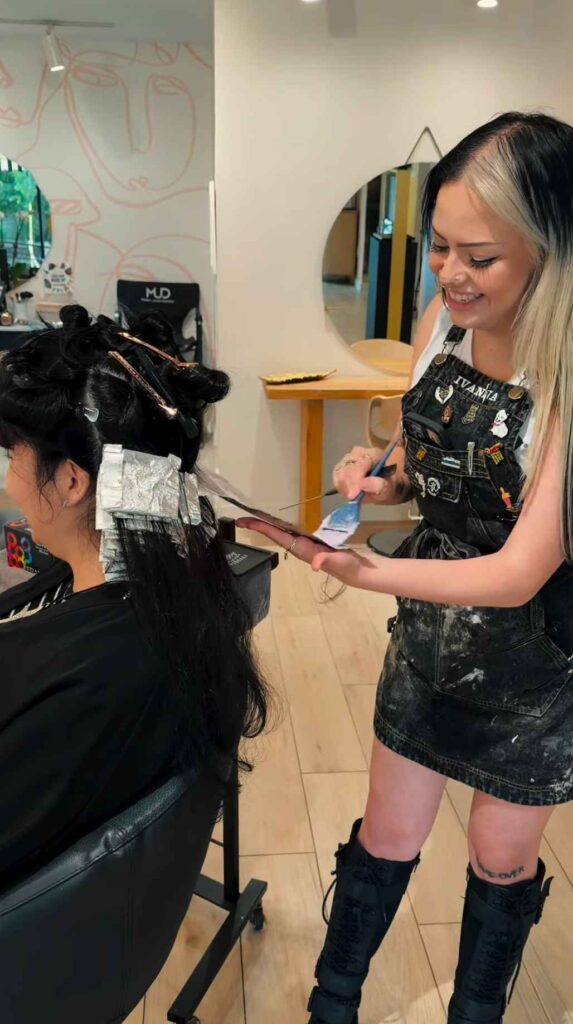
BLOG How Much Does Balayage Cost in Houston? (Honest Pricing From a Local Salon) A Studio A stylist applying balayage on dark hair in Houston — the technique and placement are what separate a great result from a brassy one. If you’ve searched for balayage pricing in Houston, you’ve probably noticed that most salons either don’t list prices or give a range so wide it’s useless. This post gives you a straight answer — and explains what actually moves the price up or down so you know what to expect before you book. What Balayage Typically Costs in Houston At a quality Houston salon, balayage generally falls in this range: Partial balayage: $150 – $250 Full balayage: $200 – $350 Balayage + toner or gloss: add $50 – $100 Balayage + haircut and style: add $75 – $150 These are honest mid-to-upper market numbers for Houston. Prices below this range usually mean shorter appointment times, fewer foils, or less experienced hands. What Makes the Price Go Up Length and thickness of your hair. More hair means more product and more time. Shoulder-length and below costs more than a bob. Your starting color. Going from dark brown to a bright, dimensional blonde takes more lightener — and sometimes more than one session — than going from a medium brown to a soft caramel. If your hair is very dark or previously colored, expect the process to take longer. How much coverage you want. A partial balayage focuses on the top layer and face frame. A full balayage covers more of the head and gives a richer, more dimensional result. Full always costs more. Toner. Balayage without a toner can look unfinished. The toner is what gives you that specific shade — cool blonde, warm honey, ashy brunette. It’s almost always worth adding, and most stylists will recommend it. What Makes the Price Go Down (and Why to Be Careful) Some salons charge less by cutting appointment time, skipping the toner, using fewer highlights, or rushing the processing. In Houston’s humidity, a rushed balayage with no toner or gloss will look brassy within weeks. The savings aren’t worth it. The better question isn’t “who is cheapest” — it’s “who will give me results that still look good in three months?” How Many Sessions Will You Need? If you’re starting from a natural or close-to-natural base, one session is usually enough. If you have box dye, previous color, or want to go significantly lighter, your stylist may recommend spacing it across two sessions to protect your hair. Rushing a dramatic color change is the most common cause of damage and color correction appointments. What About Maintenance? Balayage is low-maintenance compared to traditional highlights, but low-maintenance doesn’t mean zero maintenance. Most clients come in for a toner refresh every 6 to 8 weeks and a full balayage refresh every 3 to 6 months depending on how fast their hair grows and how light they went. You can read more about timing in our post How Often Should You Refresh Your Balayage. Houston’s humidity and hard water also affect how long your color stays fresh. Using a color-safe shampoo and a weekly gloss or mask at home makes a real difference between appointments. We cover this in detail in How Houston Hard Water Affects Your Hair. According to Healthline, hard water minerals bind to the hair shaft and can cause color to fade faster and strands to feel rough even after washing — which is something Houston clients deal with constantly given the city’s water supply. Why Pricing Varies So Much Between Salons Balayage is a technique, not a formula. The results depend entirely on the skill and eye of the person doing it — how they section the hair, where they place the lightener, how they blend it, and how they choose and apply the toner. A stylist who has done hundreds of balayage services on dark Houston hair will give you a very different result than someone who learned it recently. Continuing education and hands-on training are among the strongest indicators of consistent color results. It’s worth asking your stylist how often they train. The Honest Answer to “How Much Will Mine Cost?” The only real way to give you a precise number is to see your hair in person. Length, texture, current color, and your goal all factor in. At Studio A Salon, every color service starts with a consultation so you know exactly what’s involved before anything is touched. There are no surprise add-ons at checkout. What we quote in the consultation is what you pay. Ready to Find Out What Your Balayage Would Cost? Book a consultation at Studio A Salon in Houston and we’ll walk you through exactly what your hair needs, how many sessions to expect, and what the investment looks like — before we start anything. Book your appointment here.
How Long Does Balayage Take? What to Expect at Your Houston Appointment

BLOG How Long Does Balayage Take? What to Expect at Your Houston Appointment balayage Houston, how long does balayage take, balayage appointment Houston, what to expect balayage, balayage Houston salon, first balayage appointment, balayage process Houston, how long does balayage take Houston, Houston hair color appointment, b Balayage hair color results at Studio A Salon in Houston featuring dimensional blonde highlights and a seamless blend. Booking your first balayage appointment in Houston comes with a lot of questions. How long will it take? What actually happens during the appointment? Will you have to sit there for five hours? Do you need to do anything to prepare? This guide walks you through everything — from the moment you walk in to the moment you leave — so you know exactly what to expect and can book with confidence. The Short Answer on Time A full balayage appointment at Studio A Salon in Houston typically runs 3 to 5 hours from start to finish. A partial balayage is closer to 2 to 3 hours. If you’re adding a haircut and blowout, budget for the longer end of that range. If this is your first time going significantly lighter, plan for the full window. That might sound like a lot. It isn’t — once you understand what’s actually happening to your hair during that time. What Happens Step by Step Here’s how a full balayage appointment at a quality Houston salon actually breaks down: Consultation and sectioning: 15 to 30 minute Lightener application: 45 to 90 minutes depending on hair length and thickness Processing time: 30 to 60 minutes Rinse and toner application: 20 to 40 minutes Toner processing: 15 to 25 minutes Blowout and style: 30 to 60 minutes The application alone takes longer than most people expect because balayage is hand-painted, not foiled on a grid. Your stylist is making individual decisions about placement, saturation, and blending on every section of hair — customized to your face shape, hair texture, skin tone, and the specific result you’re going for. That cannot be rushed without showing up in the result. What Happens at the Consultation Every balayage appointment at Studio A starts with a consultation before anything touches your hair. This is not a formality — it’s where your entire result gets designed. Your stylist will look at your hair in natural light, ask about your history (previous color, box dye, heat damage), talk through your goal, and give you an honest assessment of what’s achievable in one session versus what might take two. We’ll also go over timing and cost so there are no surprises at checkout. If you want to know what questions to bring to your consultation, read our guide on what to ask your hairstylist before coloring your hair in Houston. [anchor: “what to ask your hairstylist before coloring your hair in Houston”. What Actually Affects Your Appointment Length Your hair length and thickness. More hair means more painting time, more product, and longer processing. A short bob and waist-length hair are completely different appointments even if you want the same look. Your starting color. The darker your base, the more time lightener needs to lift your hair to a level where toner can do its job. If your hair is very dark or has previous color on it, your stylist will need to be careful about timing and may recommend spacing the process across two sessions to protect your hair’s integrity. You can read more about what happens when color goes wrong and how correction works in our post on hair color correction in Houston. How dramatic the change is. Going from dark brunette to a cool, bright blonde takes more time than refreshing existing balayage or adding soft dimension to a medium brown. Be honest with your stylist about your goal — the consultation is the right place for that conversation, not after the lightener is already on. Whether you add a toner. You should. A toner is what gives your balayage its finished, intentional color — cool ash blonde, warm honey, rich chocolate brunette. Without it, lightened hair can look yellow or unfinished. It adds 30 to 45 minutes to your appointment, but it’s the difference between hair that looks done and hair that just looks processed. First Appointment vs. Refresh Appointment Your first balayage will almost always be the longest appointment you have. Once your stylist knows your hair and has your formula on file, future appointments move faster because the groundwork is already laid. Most clients come back for a toner or gloss refresh every 6 to 8 weeks — a much shorter appointment — and a full balayage refresh every 3 to 5 months depending on how fast their hair grows and how light they went. We cover refresh timing in detail in our guide on how often you should refresh your balayage. What the Experience Actually Feels Like If this is your first balayage appointment, here’s what to expect beyond the technical steps. The consultation will feel like a real conversation, not an upsell. Your stylist will ask questions, look at reference photos if you have them, and give you an honest read on your hair before making any recommendations. The application is relaxing once you settle in. You’ll be sectioned and painted section by section — it takes a while but there’s no dramatic sensation. Processing time is completely hands-off, which is when most clients catch up on their phone, watch something, or just decompress. The toner rinse is where you start to see the result take shape. Most clients feel a genuine excitement at this stage. The blowout is the reveal — and a good blowout after a balayage shows you the full potential of what your hair can do. You will leave feeling different than when you walked in. That’s the point. Does Houston’s Climate Affect Processing Time? It does. Heat and humidity speed up lightener processing, which sounds helpful but can actually lead to uneven results if your
Hair Color Correction in Houston: Fixing Bad Hair Color the Right Way
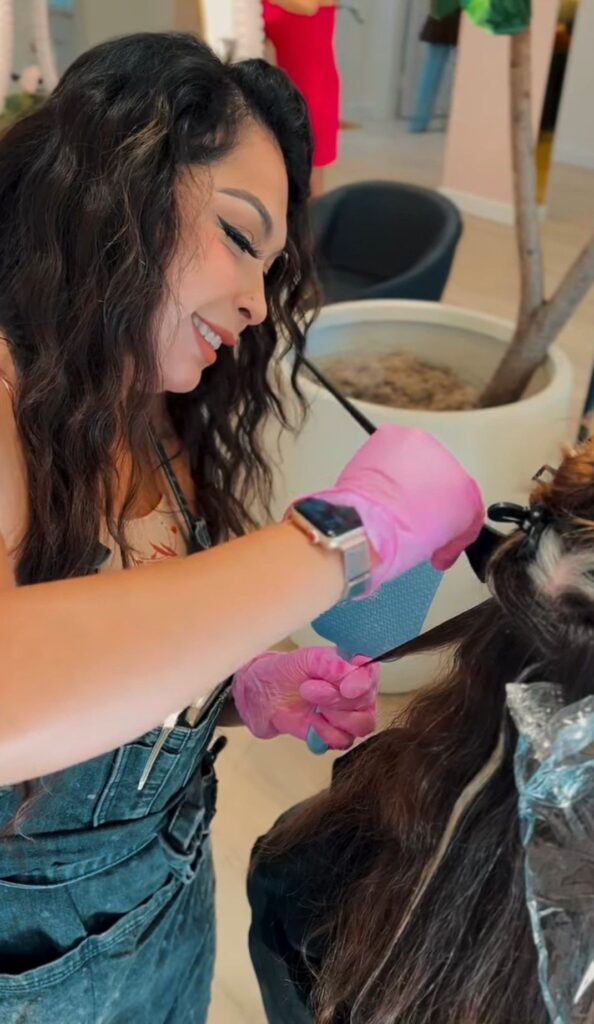
BLOG Hair Color Correction in Houston: Fixing Bad Hair Color the Right Way Beautiful hair starts with the right hands. ✨ From custom color and balayage to seamless blending and healthy, shiny results, every appointment is tailored to bring out your best look. Watching a transformation come to life is always the best part. 💕 You walked into a salon hoping to walk out with the hair of your dreams. Instead, you left with something brassy, blotchy, or just plain wrong. Maybe you tried a box dye at home that turned green. Maybe a colorist went too dark and now you feel like a completely different person — not in a good way. Whatever happened, you’re now searching for hair color correction in Houston — and that search has brought you here. At Studio A Salon, our color artists have spent years correcting hair color disasters of every kind, and we want to give you the honest, complete picture of what color correction actually involves before you book your next appointment. “Color correction isn’t just about fixing what went wrong — it’s about understanding why it went wrong and making sure it never happens again.” What Is Hair Color Correction? Hair color correction is a specialized service designed to fix hair that has been colored incorrectly — whether by a previous stylist, a box dye, or simply an experiment that didn’t go as planned. Unlike a standard color appointment, correction work requires deep technical knowledge of hair structure, color theory, and chemistry. According to the American Salon, color correction is one of the most technically demanding services in the professional hair industry. That’s because every head of hair tells a different story — your natural pigment, previous chemical treatments, heat damage, and product buildup all affect how your hair will respond to color. When performed by a trained colorist, correction can involve a combination of techniques including: Lifting — removing existing artificial or natural pigment Filling — replacing lost pigment before re-coloring Toning — neutralizing unwanted warmth or coolness Re-coloring — applying a new, corrected shade Bond rebuilding treatments — restoring structural integrity with products like Olaplex COMMON PROBLEMS WE FIX The Most Common Hair Color Problems in Houston Houston’s humidity, hard water, and intense sun create some unique challenges for hair color maintenance. Here are the most common color disasters our team sees — and corrects: 🟠Brassiness & Orange Tones The most frequent complaint. Happens when hair isn’t lifted to the right level before going blonde, or when toner fades. 🟡Yellow or Greenish Blonde Yellow can result from over-toning or underlying pigment not being neutralized. Green often comes from chlorine or certain box dyes reacting with minerals. ⚫Too Dark / Black Box Dye One of the hardest corrections. Black dye sits on every layer of the hair shaft and must be removed carefully and gradually. 🎨Uneven or Patchy Color Poor application technique or inconsistent processing time leads to blotchy, two-toned results. Often seen with at-home highlights. 🔴Failed Balayage or Highlights Chunky highlights, over-processed ends, or balayage that looks striped instead of blended all fall under this category. 💔Chemical Damage from Bleach Over-bleached hair can become mushy, gummy, or break off. Correction here is about restoring health first, color second. Why You Should Never Try to Fix Bad Hair Color at Home We understand the temptation. You’re staring at orange hair, a box of “ash blonde” is sitting in your Amazon cart, and you’re convinced you can fix it yourself. Please don’t. Here’s the problem: hair color doesn’t work subtractively the way paint mixing does. Putting an ash tone over orange doesn’t give you a neutral blonde — it gives you green, or brown, or something that ends up even harder to correct. The chemical processes involved in hair color are complex, and without understanding the underlying pigment wheel and hair porosity, DIY attempts almost always make the situation worse. ⚠ A WORD OF CAUTION Over-the-counter color strippers, bleach kits, and “color removers” are frequently the cause of the most severe correction cases we see. When used without proper knowledge of your hair’s current state, they can cause irreversible breakage. If your hair feels gummy, stretchy, or snaps when wet — stop all chemical processes immediately and consult a professional colorist before doing anything else. Our team at Studio A offers in-depth consultations before any correction service. The Studio A Color Correction Process Every color correction at Studio A Salon begins the same way — with a thorough consultation. No two correction cases are the same, and your colorist needs to understand your full hair history before touching a single strand. Here’s what the process typically looks like: In-Depth Color Consultation Your colorist reviews your hair history, including previous color, chemical treatments, heat use, and product routine. We look at porosity, integrity, and the current underlying pigment. This step cannot be skipped — it’s the foundation of a successful correction. Strand Testing Before any chemical is applied to your entire head, we test a small, hidden strand to predict how your hair will react. This protects the integrity of your hair and helps us calibrate the correct formula and processing time. Correction Phase (Lift, Fill, or Remove) Depending on your hair’s needs, this might involve a careful bleach or color remover to lift existing pigment, or a “filler” application to replace missing pigment before re-coloring. This is where the technical expertise truly matters. Toning Once the underlying pigment is where it needs to be, we apply a toner to neutralize any remaining unwanted warmth or coolness and dial in your target shade. A great toner is often the difference between “close” and “perfect.” Bond & Moisture Treatment Chemical processes stress the hair’s disulfide bonds. We use professional treatments — including Olaplex and Kérastase — to rebuild strength and restore moisture throughout the correction process. Aftercare Plan & Home Routine You leave with a clear roadmap: which shampoos to use, how often to wash, when to come back for a toner refresh, and how to protect your color in Houston’s sun and humidity. Color
What to Ask Your Hairstylist Before Coloring Your Hair in Houston
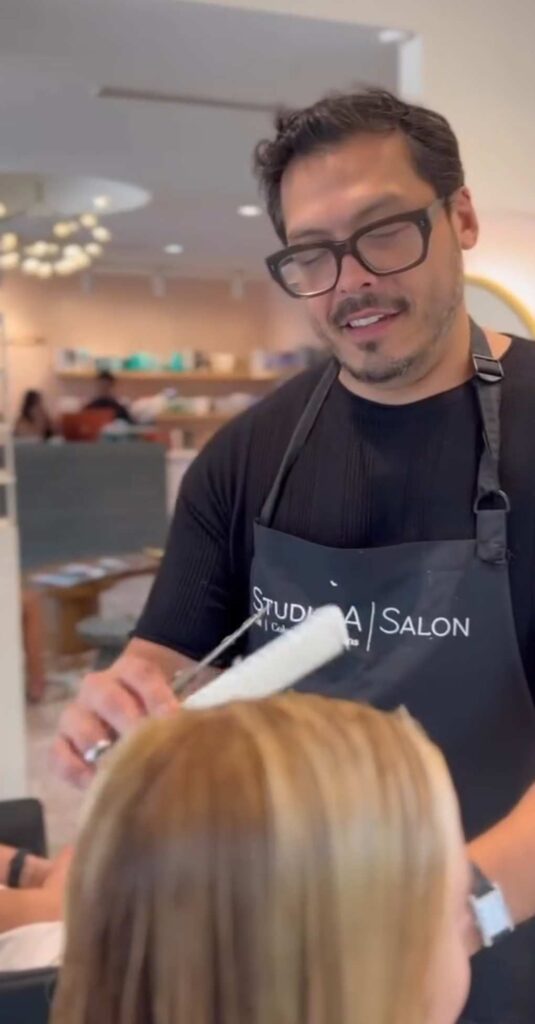
BLOG What to Ask Your Hairstylist Before Coloring Your Hair in Houston A great hair color appointment starts with the right consultation. At Studio A Houston, every color service is tailored to your hair history, maintenance goals, and the look you actually want to achieve. Hair color appointments don’t go sideways because someone “picked the wrong shade.” They go sideways because the plan didn’t match your hair history, your maintenance tolerance, or what Houston humidity and sun exposure will do to that tone after week two. A good consultation turns a Pinterest idea into a real color formulation your stylist can repeat, refresh, and keep healthy, whether you’re booking gray coverage in The Heights or going for platinum blonde. Why a Pre-Color Consultation Matters in Houston A consultation is where you and your stylist agree on what’s realistic for your hair today, not what’s possible “eventually.” That matters a lot if you’ve had boxed dye, past bleach or lightener, heat damage, a keratin treatment, or other chemical services that affect lift and hair integrity. It also protects your time and budget. When you confirm the process, number of steps, and maintenance schedule up front, you avoid surprise add-ons like extra bowls, long/thick hair fees, toner, gloss, or a last-minute color correction. Houston adds its own variables. Houston humidity can swell the hair cuticle and boost frizz, sun exposure can fade warm tones faster, and chlorine season can turn blondes brassy or dull. What to Bring to Your Appointment Bring 2 to 4 inspiration photos plus 1 to 2 “do not want” examples. The “no” photos prevent the classic miscommunication where you say “beige blonde” and your stylist hears “cool blonde,” or you say “copper hair” and get a brighter red hair color than you pictured. Bring a quick hair history, even if it feels unrelated. Boxed dye (including Madison Reed), salon color, henna, relaxers, keratin treatments, big medication changes, and recent procedures can all change porosity, elasticity, and how evenly your hair takes color. Questions About Your Goal Shade and Suitability Start with tone, not just lightness. Ask what tones will flatter your skin undertone and eye color, and whether you read best in warm tones, cool tones, or neutral tones. Then confirm the category of service you’re actually asking for. A single-process color is very different from dimensional color, highlights, double-process color, or a true color correction. Don’t skip the natural base conversation. Ask how your natural level and gray percentage will influence the final result, because gray blending and gray coverage often require different placement, timing, and a different expectation for fade. Tone, Undertone, and Brass Control Ask how they’ll prevent brassiness, specifically. You want to hear a clear toner plan, whether a gloss is included, and home care guidance like purple shampoo for yellow tones or blue shampoo for orange tones. Use exact words and ask what they mean on your hair. “Ash blonde,” “beige blonde,” “gold,” “copper,” and “cool blonde” are not universal, and the same label can look totally different depending on your starting level and lift. If You’re Going Lighter or Blonde Ask how light you can go in one appointment without compromising integrity. A careful stylist will talk about your current condition, previous color, and how your hair responds during processing, not just what you want. If you’re aiming for platinum blonde, pastel hair, lavender hair, or vivid color, ask if you’ll need multiple sessions. Those shades often require clean, even lift first, then controlled toning, and rushing is how you end up with breakage or patchy banding. Understanding Hair Color Maintenance Before Your Appointment Before choosing a new hair color, it’s important to ask how much maintenance will be involved after the appointment. Some shades require regular toning, gloss treatments, or more frequent touch-ups to keep the color looking fresh, especially in Houston’s heat and humidity. Learning more about proper aftercare through L’Oréal Professionnel’s hair care tips can also help protect the health and appearance of your hair between salon visits. Questions About Hair Health, Damage Risk, and Safety Ask what your hair can handle right now. A stylist should be willing to talk about porosity, elasticity, and breakage risk, and whether a strand test is smart before committing to a full lightening service. Bring up scalp sensitivity and any past allergic reaction to dye. Ask whether a patch test is recommended, and whether your service can be adjusted to reduce scalp contact if you’ve had irritation before. Ask how they’ll protect your hair during lightening. You’re listening for specifics like a bond builder, a lower-volume developer when appropriate, careful timing strategy, and when they’d choose bleach versus a gentler lightener based on your goal. Medical and Medication Considerations Ask whether lupus, rosacea, or HRT could affect sensitivity, healing, or color results, and whether you should check with your clinician first. Many people can still color their hair, but flares, new meds, and reactive skin change the risk profile. Share topical prescriptions, recent procedures, or scalp conditions before you book chemical services. This is also where your stylist may suggest a strand test, a patch test, or a more conservative approach like gray blending, a shadow root, or a root melt to reduce scalp stress. Questions About Technique: What Exactly Will You Be Doing? Ask which technique they recommend and why. The right answer might be balayage, foils, babylights, a root smudge, hand-painted color, or an all-over single-process color, depending on your hair density, your part line, and your upkeep tolerance. Confirm placement and contrast level. “Soft dimension” and “high-impact highlights” are totally different looks, and the maintenance schedule changes with it. Ask whether they’ll include a toner or gloss, and what it’s intended to do. Toner can neutralize warmth, refine a blonde, or deepen a shade, while gloss can add shine and refresh tone between bigger appointments. If you’re still deciding between techniques, it helps to read a clear breakdown of the difference between lived-in painting
Studio A Salon Named Best of Bridal

BLOG Studio A Salon Named Best of Bridal Thank you Houston Modern Luxury for naming Studio A Salon Best of Bridal. Fall 2017! Studio A Salon specializes in elegant, timeless bridal hair and makeup. Our emphasis is creating a look that compliments the bride and her party’s face shape and overall wardrobe. We will create a look that will forever be remembered as A-mazing. At Studio A Salon, our services include makeup, hair, skin, tanning for you and/or the mother of the bride, groom or the entire bridal party. Click here for more on our Bridal Services
